
NextEra’s $67 billion Dominion Power acquisition puts power in the same M&A tier as oil & gas. The consolidation cycle behind it will define energy investment for the next decade.
By Emily Brown Easley · NOVUS Energy Advisors · June 2026
The $67 Billion Deal That Opens a Cycle
IOn May 18, NextEra agreed to acquire Dominion Energy for $67 billion. The deal sits alongside Exxon’s $65 billion acquisition of Pioneer Natural Resources in 2023 and Chevron’s $53 billion acquisition of Hess, which closed in July 2025, as one of the three largest U.S. energy mega-mergers of the cycle. By transaction size, the power sector has now done what only oil and gas had been doing at this scale.
The signal matters more than any single feature in the deal itself. The U.S. utility industry has spent two decades in a defensive M&A posture, small bolt-on acquisitions, occasional rate-base consolidations, the occasional regional combination. The Dominion deal is structurally different. It is the largest power and utility merger ever recorded. The combined entity is the largest regulated electric utility in the world, the country’s largest renewable developer, the U.S. leader in natural gas generation, and number two in nuclear. Ten million customers across Florida, Virginia, North Carolina, and South Carolina. A combined construction backlog of 130 GW priced against the hyperscaler load corridors that are going to define the next decade of demand growth.
NextEra CEO John Ketchum said it on the announcement call: scale matters more than ever. That is the thesis of 2026, stated by the person who just paid $67 billion to back it. Bloomberg estimates U.S. utilities and grid operators will invest more than $1.1 trillion over the next five years on new generation and transmission. The capital is here. The AI demand is here. The regulatory framework is here. What was missing was the pressure to consolidate at hyperscaler speed. The Dominion deal is that pressure breaking.
Why The Middle Has To Move
FRepricing the top of an asset class forces every asset below it to be revalued against the new comparable. That is the mechanical effect of a $67 billion mega-merger landing in a consolidating sector. It is not metaphor. It is what investment committees are working through right now.
The mid-cap regulated utilities go first. Duke, Southern, Exelon, AEP, and Sempra are now being evaluated by their boards against the NextEra-Dominion comparable. Each has either the regulated rate base, the renewable pipeline, or the geographic exposure to hyperscaler load corridors to be the next strategic counterparty. Some will become buyers. Some will become targets. The capital allocation decisions being made in those boardrooms right now are explicitly positioning against the new bar.
The merchant generators move next. Vistra, Talen, and Constellation have been signing twenty-year bilateral PPAs with hyperscalers — Meta, Amazon, Microsoft — that have transformed them from commodity merchants into contracted infrastructure plays. The NextEra-Dominion deal validates the structural shift toward long-dated, contracted, dispatchable power at scale. Any analysis still treating these companies as commodity merchants is now pricing them against comparables that no longer apply.
Beyond the named players, the cycle pulls in everything connected to large-load power delivery — transmission developers, behind-the-meter dispatchable infrastructure, gas-fired generation, advanced nuclear, geothermal, storage operators, land with grid access. Every one of these now sits between a new top-of-stack comparable and a demand profile that did not exist five years ago.
Where The Pattern Started
NextEra did not become the buyer in the largest utility deal ever recorded by accident. It built the platform over twenty-eight years.
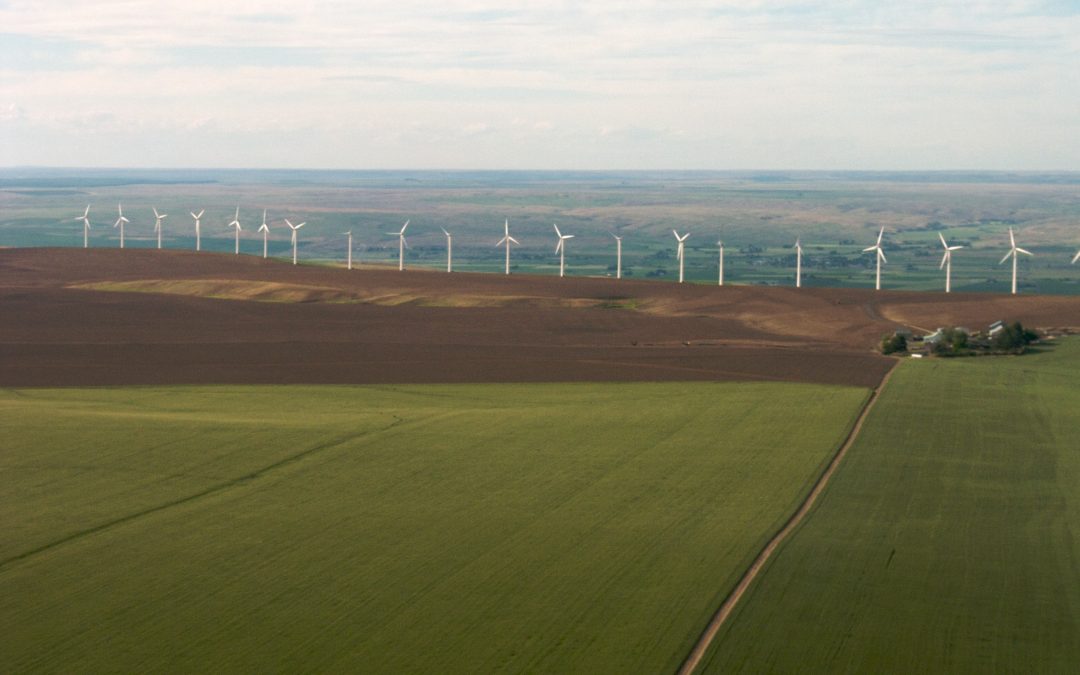
In 1998, FPL Group — the Florida-based holding company that owned Florida Power & Light — commissioned its first wind project near Helix, Oregon, through a new competitive subsidiary called FPL Energy. FPL was a Florida utility. It had been a Florida utility since 1925. The Helix project was modest, it was unfinanceable without the Production Tax Credit, and it was located twenty-five hundred miles from FPL’s service territory. It was also the first move in a strategy that would compound for the next twenty-eight years. FPL Energy used the regulated parent’s balance sheet to absorb construction risk while the credits monetized. Between 2002 and 2003, FPL Energy built or acquired seventeen wind farms across nine states. By 2009 it had renamed to NextEra Energy Resources and become the largest wind and solar generator in the country. The next year, FPL Group renamed to NextEra Energy, Inc. In 2019, NextEra paid $5.75 billion for Gulf Power. In 2026, NextEra paid $67 billion for Dominion.
Same pattern, different scale. The 1998 first wind farm worked because the PTC existed and the regulated FPL balance sheet underwrote the competitive bet. The 2026 Dominion acquisition works because the broader policy stack exists — OBBB preserved the tax credits for dispatchable generation, FERC’s large-load rulemaking turned hyperscaler demand into contracted revenue, PJM’s Section 206 order and the Ratepayer Protection Pledge gave NextEra the architectural template for the $2.25 billion in bill credits that made the deal politically survivable. Every piece of the stack lined up. Anyone watching for the next NextEra is watching the wrong thing. The next NextEra is being assembled across multiple companies right now, by capital that reads federal policy correctly and stays in position long enough for it to mature.
How To Position Capital
Four concrete categories for capital allocation while the repricing is still incomplete.
Regulated utility equities with hyperscaler load exposure. NextEra-Dominion repriced the entire category. Utilities with disproportionate rate base in the load corridors — Northern Virginia, central Texas, the Carolinas, the desert Southwest — trade at premiums that did not exist in 2024. The discipline is to avoid paying for a utility that lacks the construction backlog or the regulatory relationships to actually execute on the demand.
Behind-the-meter dispatchable infrastructure. Gas microgrids, paired storage, geothermal, advanced nuclear. The asset class OBBB explicitly favors and the AI buildout actually needs. The private side is moving aggressively now — by the time public comparables arrive, the better entry points may already be closed.
Land in integrated propositions. Not raw acreage. Acreage packaged with water rights, transmission adjacency, in-place infrastructure, and grid flexibility resources. The appraisal class change from agricultural to industrial corridor is the wealth event for landowners, and the integrated proposition is the structural form that captures premium economics. The capital that organizes early captures the multiples. The capital that waits buys at retail.
ADER-eligible flexibility assets. Sites in ERCOT and similar markets with the regulatory infrastructure to monetize distributed generation, storage, and controllable loads through grid services. Most investors are still mispricing this because they are treating ADER as demand response. It is not.
The shale era was defined by the movement of molecules. The next cycle will be defined by the movement of electrons. NextEra just paid $67 billion to position for it, and the deal flow behind it is going to redefine where energy-sector capital lives for the next decade. The capital that follows early captures the move.