
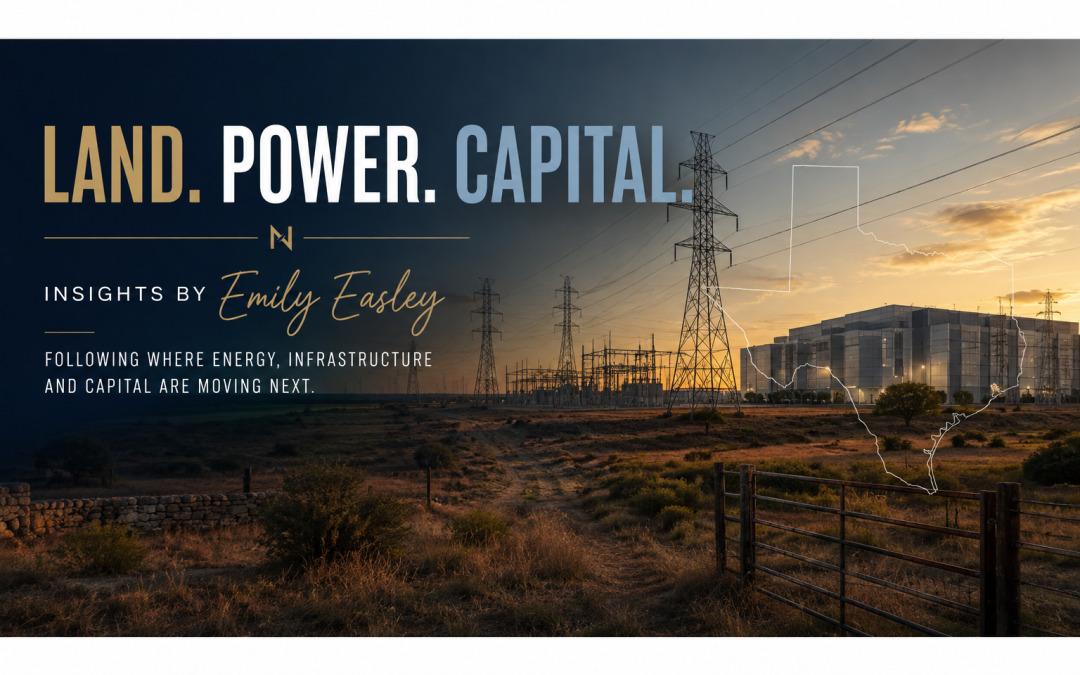
Last week, the Texas PUC approved two major 765 kV transmission routes, the first of their kind in Texas. And this is just the beginning.
Why? Look at what is coming.
The Permian has abundant natural gas. Texas already produces more wind and solar than anywhere in the country. Now add semiconductor plants, Stargate AI campuses, data centers, LNG exports and manufacturing coming back to the U.S.
Then add the hundreds of companies that have relocated to Texas and the launch of new Texas-based stock exchanges. What did we think was going to happen? Build one of the largest economies in the world and risk the lights not turning on?
Texas needs a lot more power.
And while 765 kV may be new to Texas, the infrastructure itself isn’t. The Midwest has had these lines since the 1960s and China is already building at 1,000 kV and above. The towers are massive, but so is what Texas is building.
What has me so excited is that everything is coming together at once.
Natural gas + wind + solar + batteries + geothermal + demand response, connected to some of the largest new loads we have ever seen.
I have spent more than two decades watching these markets develop, and for years we talked about many of these technologies separately. Now we actually need them working together. At the same time, the market is getting much better at separating announcements from projects that can actually get built. The next phase isn’t about more speculative projects sitting in a queue. The projects moving forward have real customers, real capital, community engagement and a plan for managing power, water and other resources responsibly. That distinction matters, particularly if you own the land around them.
We have seen this before
I have watched this happen in Northern Virginia for the last decade.
As data centers expanded, land near the right power, substations and fiber went from ordinary real estate to some of the most valuable development property in the country. Now Texas is setting up to do it on a much bigger scale.
Is anyone surprised? Everything is bigger in Texas.
These new transmission corridors will run for hundreds of miles. New substations will be built along the way. Generation, storage and large customers will follow the power. Think of them as new electron highways across Texas.
And just like an interstate changes the value of land around an exit, major power infrastructure changes the value of land around a substation or transmission corridor. We are already seeing it.
Properties that have been farmed or ranched for generations can suddenly have a very different highest and best use. Land adjacent to the right infrastructure can multiply in value almost overnight. For years, most of the conversation around energy development has focused on the developer, utility or customer. But every one of these projects has to sit somewhere.
Someone owns that dirt.
And in Texas, there is a whole lot of dirt.
Bringing 20 years of lessons back home
This part is personal for me.
I left Texas for Washington more than 20 years ago, just as renewable power was beginning to grow. I have spent my career watching policy become markets, markets become projects and projects change communities. And living in Northern Virginia, I have had a front-row seat to what happens when enormous demand for power and technology moves into communities that aren’t necessarily prepared for how quickly the landscape — and land values — can change. Now I get to bring those lessons home.
Some of the Texas families we are talking with have held their land for generations. Their ancestors could never have imagined that one day the value of those same acres might be tied to electrons, fiber, data, batteries or a semiconductor plant. The landscape is going to look different from the Texas our families knew, and certainly different from the days when wagons crossed open land and families planted stakes in the ground.
But the world has changed. And change brings enormous opportunity when we do it right.
That means respecting communities, managing water and natural resources responsibly, building projects with real customers and real capital behind them — and making sure the families who have held this land for generations have a seat at the table and participate in the value being created.
For me, this feels a little like coming full circle.
I get to bring lessons learned in Washington and Virginia back home to Texas and kick up my boots alongside the landowners who stand to see numbers for their property their grandparents could never have dreamed of.
Texas, we are here for you.
I couldn’t be more excited about what comes next — or more committed to helping my home state do it right.