
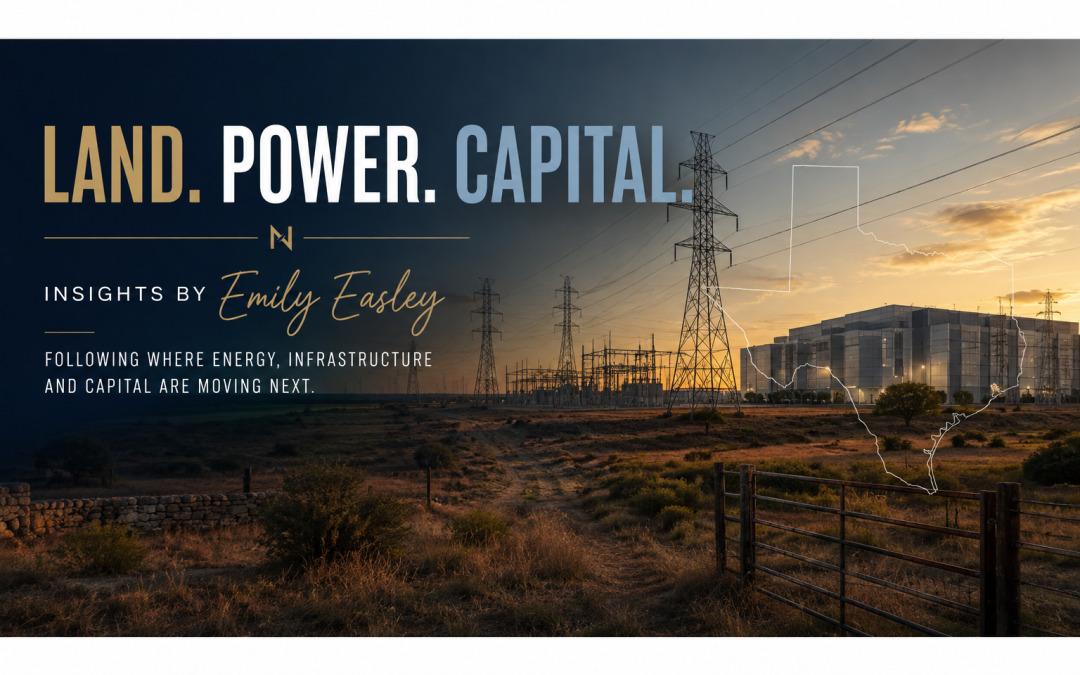
As speculative projects shake out, follow the capital, generation and grid infrastructure to see where value moves next.
Loudoun County almost went under in 2008. It was 81 percent dependent on residential real estate, and when the housing bubble burst it lost about a third of its tax revenue. Layoffs, no raises for four years, no full-day kindergarten.
So the county built a different tax base out of the fiber, power and empty buildings left over from the dot-com bust. Twenty years later, data centers pay well over half a billion dollars a year in county taxes and the tax rate has come down almost fifty cents.
Then the buildout hit a wall. In July 2022 Dominion told data center companies that power for new facilities in eastern Loudoun would be delayed for years, because transmission couldn’t keep up with what had already been approved.
The developers didn’t wait. One campus in Sterling now runs on eight natural gas turbines, roughly 120 megawatts of prime power around the clock, because it couldn’t get a grid connection. It works because the site sits on a gas pipeline.
Sound familiar?
How Texas Got Here
Texas didn’t stumble into this either. The state wrote a sales tax exemption in 2013 built around 100,000 square foot colocation facilities, and cheap land plus fast interconnection did the rest. By 2023 ERCOT’s transmission planning load forecast for 2030 had passed 150 GW, roughly double the state’s all-time peak of 85.5 GW.
What happened next was pure wildcatting.
The old wildcatters leased acreage and drilled before anyone proved there was a field under it. Take the position first, find the customer later. Most of them came up dry. The ones who hit changed their families for a hundred years.
That’s this queue. Developers have been securing land and interconnection positions ahead of signed customers, betting the demand shows up before the money runs out. Same instinct, same state, different commodity.
Then the rules caught up. SB 6 set a 75 MW large-load threshold in 2025 and ordered the interconnection process overhauled. This summer Batch Zero screened 326 projects at roughly 205 GW, and the governor ordered an audit across about 474 GW of queue.
Every one of those rules pushes the same direction. If a project can’t count on the grid, it brings its own generation. And generation needs ground.
Constraint Doesn’t Kill Demand, It Reroutes It
The contested piece of the Texas transmission plan is the 765-kV import layer, and the fight over it has been loud. But 765-kV can’t serve a large load directly. Every one of those loads still needs a step-down substation and a 345-kV path to reach it, and that layer is funded and proceeding.
If the 765-kV fight drags on, the demand doesn’t disappear. The way we serve it changes.
That likely means more substations closer to load and more generation and storage built near where the power is actually being used. Instead value spreading evenly along a transmission corridor, it starts concentrating around where all of those pieces come together.
That is not a setback for the land thesis. It is the land thesis.
Every load forecast, policy decision and transmission study eventually has to become physical infrastructure.
Policy eventually becomes the map.
A rule written in Austin ends up as a substation on somebody’s pasture. Which is why we read the filings to know where the market its headed long before the project announcement does.
And the speculative queue gets sorted out, that’s where I would be looking. Not at how many gigawatts have been announced, but where the capital is actually being spent, where generation is getting built and where the infrastructure is going.
That’s where the land rush becomes real.
Emily Easley is Founder and Managing Partner of NOVUS Energy Advisors. advising at the intersection of land, power and capital.